Glass Head Flower Pins
So beautiful you might not want to use them...but you absolutely should because they are soooo smooth and sharp!
These Cohana glass-head pins are individually handmade in floral designs called millefiori, meaning a thousand flowers. They are heated and shaped one-by-one in a flame, producing a brilliant array of shapes and colors in the glass "flowers" on the heads of the pins.
The closely-guarded production methods for these mysterious "tombo-dama" (glass beads) was established before the Nara period, which began in 710 A.D. Then, it is said that in the Edo period (1603-1868 A.D.), with much trade arriving from China and Europe, glass-making techniques from abroad influenced the technique and the production of "tombo-dama" became even more varied.
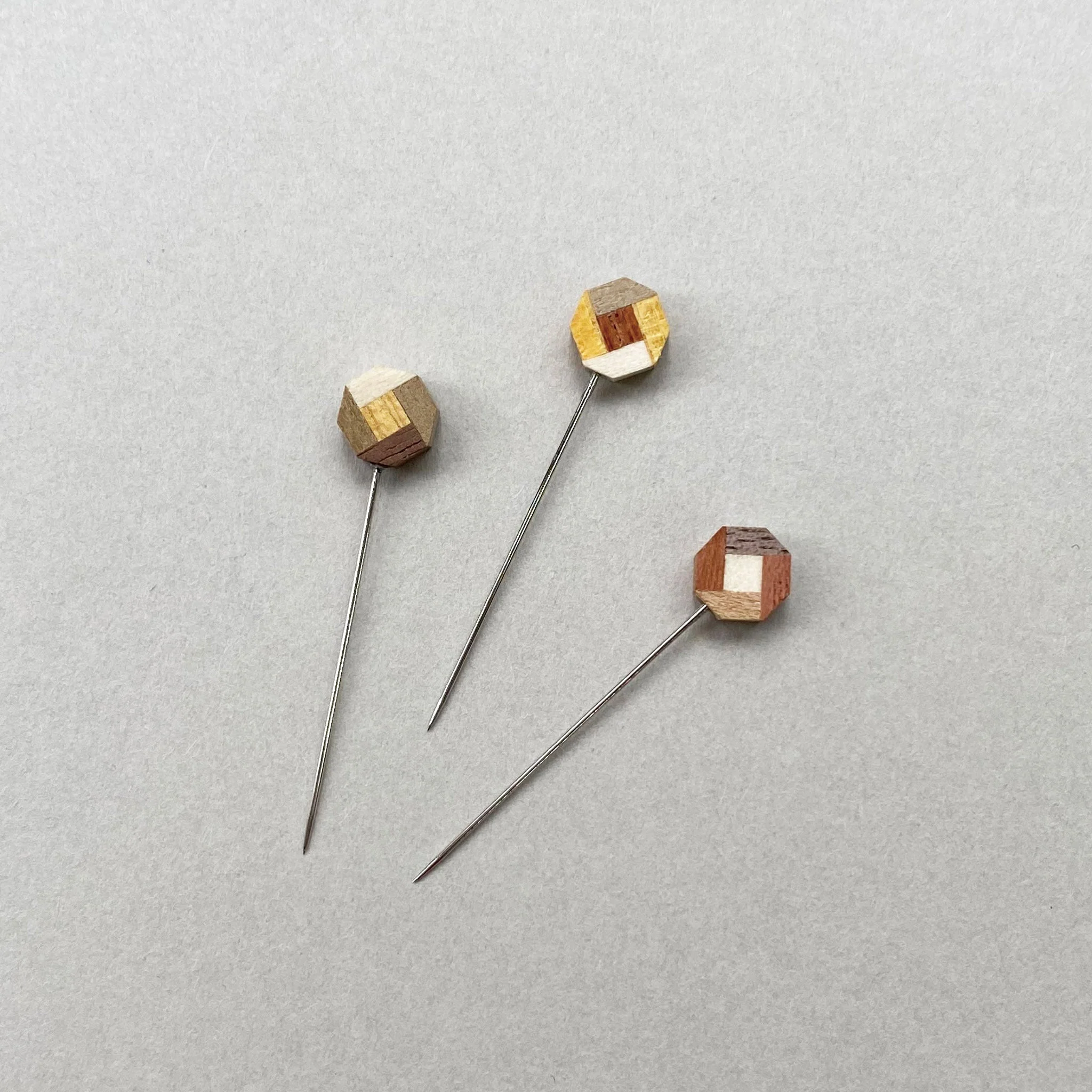
Each pack contains 3 pins
Made by hand in Japan
These Cohana glass-head pins are individually handmade in floral designs called millefiori, meaning a thousand flowers. They are heated and shaped one-by-one in a flame, producing a brilliant array of shapes and colors in the glass "flowers" on the heads of the pins.
The closely-guarded production methods for these mysterious "tombo-dama" (glass beads) was established before the Nara period, which began in 710 A.D. Then, it is said that in the Edo period (1603-1868 A.D.), with much trade arriving from China and Europe, glass-making techniques from abroad influenced the technique and the production of "tombo-dama" became even more varied.
Each pack contains 3 pins
Made by hand in Japan
Product Information
Product Information
Shipping & Returns
Shipping & Returns

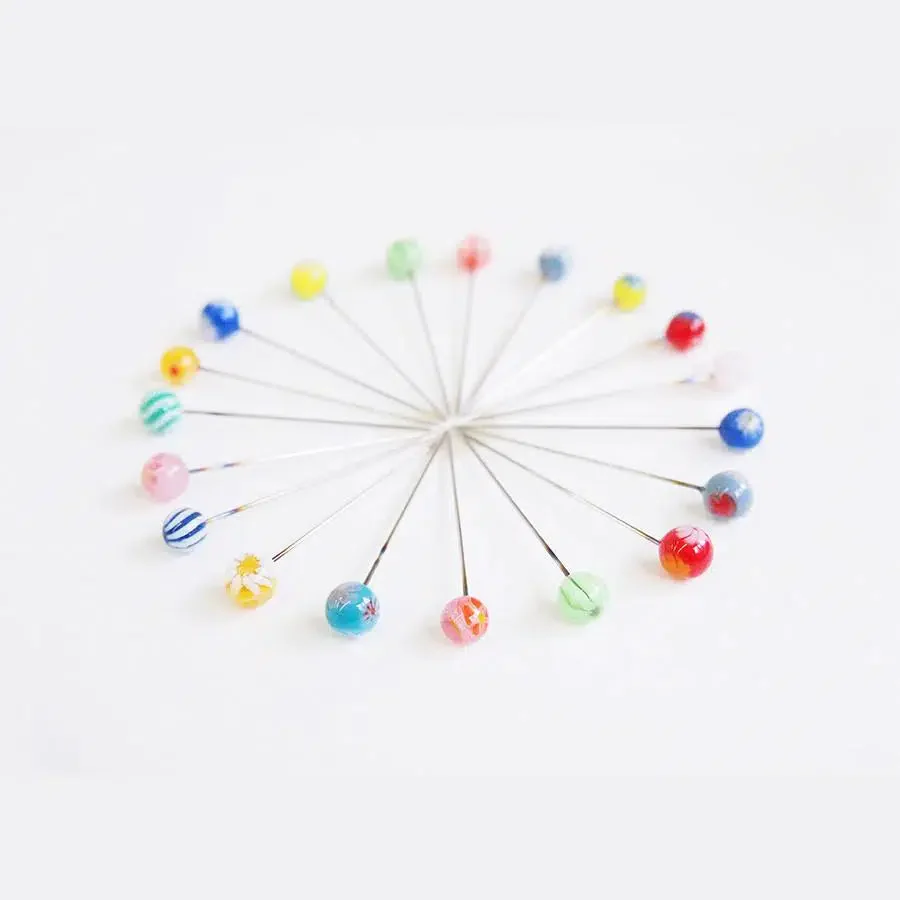


Glass Head Flower Pins
Glass Head Flower Pins
So beautiful you might not want to use them...but you absolutely should because they are soooo smooth and sharp!
These Cohana glass-head pins are individually handmade in floral designs called millefiori, meaning a thousand flowers. They are heated and shaped one-by-one in a flame, producing a brilliant array of shapes and colors in the glass "flowers" on the heads of the pins.
The closely-guarded production methods for these mysterious "tombo-dama" (glass beads) was established before the Nara period, which began in 710 A.D. Then, it is said that in the Edo period (1603-1868 A.D.), with much trade arriving from China and Europe, glass-making techniques from abroad influenced the technique and the production of "tombo-dama" became even more varied.
Each pack contains 3 pins
Made by hand in Japan
These Cohana glass-head pins are individually handmade in floral designs called millefiori, meaning a thousand flowers. They are heated and shaped one-by-one in a flame, producing a brilliant array of shapes and colors in the glass "flowers" on the heads of the pins.
The closely-guarded production methods for these mysterious "tombo-dama" (glass beads) was established before the Nara period, which began in 710 A.D. Then, it is said that in the Edo period (1603-1868 A.D.), with much trade arriving from China and Europe, glass-making techniques from abroad influenced the technique and the production of "tombo-dama" became even more varied.
Each pack contains 3 pins
Made by hand in Japan
$22.99
Glass Head Flower Pins—
$22.99
Product Information
Product Information
Shipping & Returns
Shipping & Returns
Description
So beautiful you might not want to use them...but you absolutely should because they are soooo smooth and sharp!
These Cohana glass-head pins are individually handmade in floral designs called millefiori, meaning a thousand flowers. They are heated and shaped one-by-one in a flame, producing a brilliant array of shapes and colors in the glass "flowers" on the heads of the pins.
The closely-guarded production methods for these mysterious "tombo-dama" (glass beads) was established before the Nara period, which began in 710 A.D. Then, it is said that in the Edo period (1603-1868 A.D.), with much trade arriving from China and Europe, glass-making techniques from abroad influenced the technique and the production of "tombo-dama" became even more varied.
Each pack contains 3 pins
Made by hand in Japan
These Cohana glass-head pins are individually handmade in floral designs called millefiori, meaning a thousand flowers. They are heated and shaped one-by-one in a flame, producing a brilliant array of shapes and colors in the glass "flowers" on the heads of the pins.
The closely-guarded production methods for these mysterious "tombo-dama" (glass beads) was established before the Nara period, which began in 710 A.D. Then, it is said that in the Edo period (1603-1868 A.D.), with much trade arriving from China and Europe, glass-making techniques from abroad influenced the technique and the production of "tombo-dama" became even more varied.
Each pack contains 3 pins
Made by hand in Japan